Proud to be Yarra. Why this inner-city council is a career destination.
Read time: 7 min read
Previous article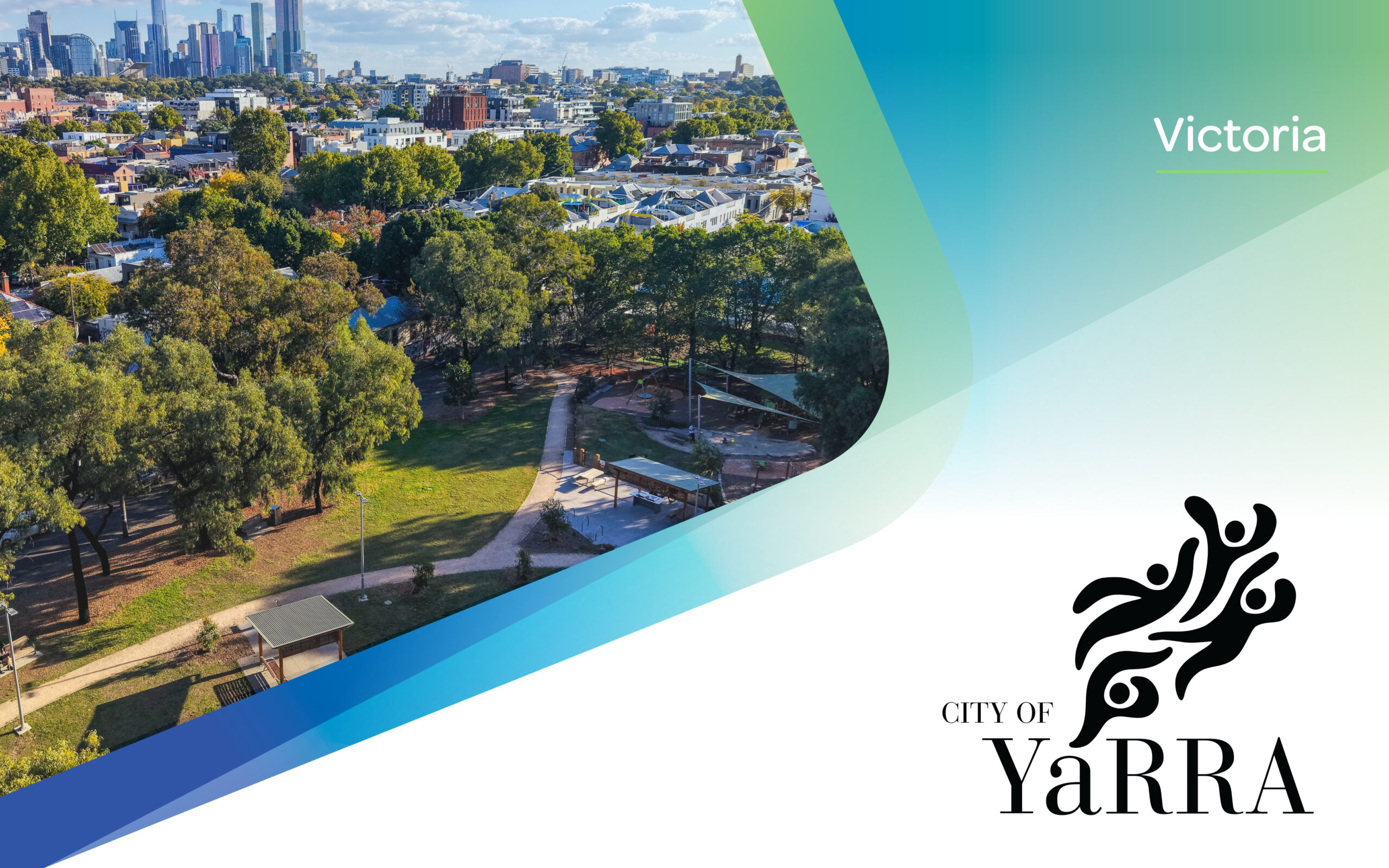
Located just minutes from Melbourne’s CBD, the City of Yarra is one of the most distinctive municipalities in local government – a place where iconic sites, a thriving arts and hospitality scene, and one of the country’s most diverse communities sit side by side.
Careers at Council sat down with Mary Osman, General Manager Sustainability and Strategy, and Brooke Colbert, General Manager Community Strengthening, to talk about ‘Proud to be Yarra’ – the organisation’s cultural vision – and what makes a career at the City of Yarra unlike anywhere else.
A council that’s never static
Ask either leader what sets Yarra apart, and the word that comes up again and again is dynamic. Brooke explains, “It is a place where community wants to be engaged with their council,” she says. “We move at pace, and we’re an inner-city location that’s very dynamic, with lots of iconic sites.”
For Mary, that dynamism comes from Yarra’s sheer breadth. “There’s a complexity to Yarra – these wonderful layers,” she says. “We’ve got amazing tourism, music, industry, people who live here, work here, play here.”
That mix across one of Melbourne’s most diverse populations means the organisation is constantly evolving. “It’s not static,” Mary explains. “It’s constantly evolving into something different in front of your eyes, whether you’re seeing that in a changing landscape of buildings or the changing migration of population.”
The sense of place is also part of what draws people to Yarra in the first place. Many staff experience Yarra as a visitor or resident long before they ever consider working there, and that familiarity becomes the entry point.
The vision behind ‘Proud to be Yarra’
Proud to be Yarra is more than a slogan – it’s a cultural initiative led by the CEO and executive leadership team, built around a clear question: what does Yarra need to look like over the next five to ten years, and how does the organisation get there?
Out of that thinking came a shared vision and three strategic pillars: culture, financial sustainability and customer.
Mary explains the thread that ties them together. “We were using Proud to be Yarra as a way to knit our current community, our future community, but also not forgetting where Yarra came from,” she says.
‘Customer’ means every interaction counts, whether that’s a resident at the counter or a colleague down the hall. ‘Financial sustainability’ reflects the pressures every council is navigating, felt more acutely because of how close Yarra sits to its community. And ‘Culture’ is about creating a place people want to bring their best selves to.
A big part of bringing that vision to life is Pitch It, a new annual program inviting staff to put forward their best ideas for improving the organisation. “It’s going to be an annual program that is structured, that is reported back,” Brooke says. Alongside it sits a focus on Proud Moments – celebrating the everyday wins and community stories from across the organisation. “It’s about sharing those stories across the organisation,” Mary says. “We all can learn a lot from that.”
Brooke adds that Pitch It also matters because so many Yarra staff work out on the road rather than in a corporate office setting. “This is really an opportunity to shine a light on the day-to-day incredible work that those teams do,” she says.

Ideas that go somewhere
It’s one thing to say diversity of thinking is welcomed – Yarra’s leaders point to a genuine mechanism behind it. Ahead of launching Pitch It, the executive team ran an honest, organisation-wide conversation with staff about what was working and what needed to change, through staff meetings, focus groups and one-on-one interviews. “We had to go backwards before moving forwards,” Brooke says.
That same openness plays out in Yarra’s cross-council working groups. Brooke points to the Reconciliation Action Plan as a good example of how far input is welcomed beyond an employee’s day-to-day role.
“We’ve got a couple of staff from procurement who, generally, it’s probably not something that would even sit in their sphere, but they’re able to contribute, offer ideas, take on responsibility for some of the delivery,” she says. “It’s a really energising way – that’s what being in a council is all about. It isn’t just your particular skill set.”
More than roads, rates and rubbish
Both leaders are quick to challenge the idea that council work is limited or slow-moving. “We have everything from parking officers to maternal child health nurses to engineers to planners to accountants,” Mary says. “I think we could check off most industries if we went down the list.”
Yarra’s community and cultural offering adds to that breadth too – Mary points to the council’s libraries and cultural events as another example of the sheer variety on offer, and the chance for staff to intersect with sectors well outside their own.
That variety carries through into the professional and technical work underway. Mary highlights the planning team’s focus on transparent, fast and inclusive processes, supported by specialists across sustainability, heritage and business advisory. Economic development, she adds, spans an unusually wide client base for a single council – from tourism and retail through to high-tech industry – giving staff exposure that’s hard to find in a more narrowly focused private sector role.
Major projects currently underway reflect that same breadth, including a significant revitalisation program for Victoria Street in North Richmond, a reimagined community street festival, and a growing investment in digital capability spanning cybersecurity, ERP systems and digital storytelling.
Brooke sees that scale of advocacy and community engagement as one of Yarra’s biggest drawcards for people considering a move from state government or the private sector. “Having worked in state government previously, you are somewhat at arm’s length,” she says. “There’s a great joy in being able to run a project or a program and really engage deeply with that community, especially at the early stages of scoping those works out.”
Brooke is also direct about the perception that local government means excessive process. “Individuals as subject matter experts do get a lot of autonomy to drive their work,” she says. “If anyone is looking to make the change from private sector or other, don’t necessarily bundle all of government up under the one umbrella.”

Room to grow, and a reason to come back
Internal mobility is clearly a point of pride for both leaders. Yarra runs a structured expression of interest program that allows staff to move across divisions, supported by mentoring, cadetships and secondments. Mary adds that the organisation also maintains strong relationships with universities and other tertiary providers, bringing in students who go on to build their careers at Yarra. “You look at them again in three years’ time,” she says, “and go, hang on a minute – how did you land over there?!”
Brooke points to a recent example of a staff member who moved from an entry-level administrative role into a community engagement position after putting up their hand and building new skills along the way. “Those are the types of success stories that we feel really proud about,” she says.
Mary has seen the same pattern play out over years, including staff who leave Yarra altogether before returning with a broader perspective. “It’s really lovely to watch people start at Yarra, reach a point, leave, and then come back and bring a whole new game plan,” she says. “That’s I think a real selling point for us – that we do get people back.”
What new starters notice first
For anyone weighing up whether Yarra is the right move, both leaders point to the people. “The thing that often gets told to me through the induction program is how kind and caring both their colleagues, their supervisors and the broader organisation are,” Brooke says, adding that setting people up for success early is something the organisation takes seriously, given how overwhelming joining a large organisation can be.
Mary adds that most new starters are surprised by just how much the organisation does. “Within the first three to six months, you are just learning about all the different things we do,” she says. “It really does broaden people’s horizons.”
Ultimately, for both leaders, it comes down to alignment. “It’s the connection with the values – my personal values connect with the place that I’ve chosen to work,” Mary says. Brooke puts it simply: “It’s values alignment that gets me out of bed every day.”
Ready to find your place at Yarra? Explore current opportunities at the City of Yarra here.