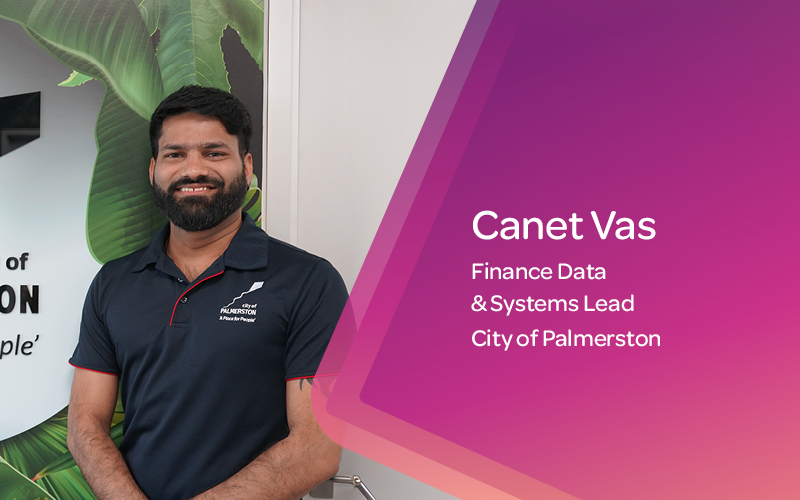
Q&A with Canet Vas, Finance Data and Systems Lead, City of Palmerston
When Canet Vas moved from Melbourne to Darwin, it wasn’t just for the tropical weather. It was a chance to build a meaningful finance career in local government – close to community priorities and far from four-hour daily commutes.
Now the Finance Data and Systems Lead at City of Palmerston, Canet manages budgets, financial reporting, and the systems that keep council finances running – all with a clear focus: using public money wisely for public good. Careers at Council recently caught up with Canet to learn more about his career journey and what it’s like working in finance for one of Australia’s most dynamic regional councils.
Q. How did your career begin, and what ultimately brought you to Darwin?
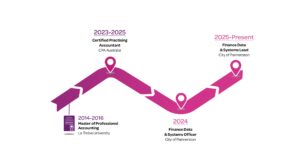
A. I came to Australia to complete my Master’s Degree and, like many new graduates, started out in hospitality – housekeeping, concierge, front office – before moving into accounting. My wife and I are from a tropical part of India, so Melbourne’s weather wasn’t ideal for us. Darwin felt familiar. Relocating meant restarting locally, but it was the right decision for our life and careers.
Q. What led you to consider a role in local government, and how did your journey at City of Palmerston begin?
A.I joined City of Palmerston as a Finance Data and Systems Officer. I’d assumed government jobs might be ‘relaxed’ like they can be back home, that’s not the case here! I learned fast on the job, and quickly discovered that the role was really in-depth and challenging which actually helped me step up to the Lead role later on.
Q. What does your current Finance Data and Systems Lead role involve on a day-to-day basis?
A. Budgets are a major part: preparing the annual budget and coordinating the two formal budget reviews required under the Local Government Act. I work with directorates on how they’re tracking, and I report end-of-month financial performance to elected members. I also manage term-deposit investments, assist with surplus analysis, and support end-of-year financial statements.
Q. What does the ‘systems’ component of your role involve, and how does it connect with the finance work?
A. We operate multiple systems across finance, assets, and rates. I’m the bridge between council and software suppliers – resolving issues and making sure systems talk to each other. I lead a small team (a Systems Officer and a Finance Graduate) and work closely with IT on the broader infrastructure.
Q. What would you consider a successful day or week in your role, and how does this change across the year?
A. It’s seasonal. At year-end, completing two or three notes for the financial statements is a win! They’re interdependent, so progress can be slow. During budget season, a good day is landing a draft that incorporates councillor feedback and balances priorities.
Q. Which internal teams and external stakeholders do you work with most frequently, and how do those relationships operate?
A. Within Finance and Governance, I work with payroll, rates, governance, assets, and IT to compile monthly reporting. I work very closely with Infrastructure because capital projects take a large share of the budget. Externally, I prepare reports for our General Manager to present to council; any changes or feedback come back through that channel.
Q. How do you keep the community front of mind in a finance role that is not directly customer-facing?
A. Budget time is where it’s most visible. We consider community feedback – the park upgrade, the road that needs resurfacing, and I model rates accordingly. It can’t be too high or too low. Councillors approve the final settings, but my job is to provide responsible options. It’s public money; people should see how rates translate into services.
Q. Is there a project or improvement you are especially proud to have contributed to during your time at council?
A. Swell, our Olympic-spec swimming facility, opened to the community and is free to use. I supported it from the financial side, and it’s great seeing people benefit. Internally, I’m part of the move to a new ERP that will integrate assets, rates, finance, and payroll. Shifting from multiple disconnected systems to one platform will make life much easier across council.
Q. What support have you experienced for learning, development, and professional progression at City of Palmerston?
A. Strong support. There isn’t an ‘automatic internal promotion’ policy, but experience in the team helped when I applied for the Lead role. The standout is professional development — City of Palmerston sponsors my Certified Practising Accountant (CPA) studies and supports colleagues through other programmes. If training helps you do your job better, leadership backs it.
Q. How would you describe the workplace culture at City of Palmerston, and what makes it stand out for you?
A. Supportive, friendly, and genuinely multicultural. We celebrate birthdays, share food, and people can bring their whole selves to work. It’s become one of the best atmospheres I’ve worked in – I even missed being at work while on parental leave!
Q. What are the key financial challenges facing councils at the moment, and how are you approaching them?
A. The main challenge is meeting community expectations with limited funds. Rate revenue only stretches so far, and external funding can fluctuate. We’re exploring more sustainable funding sources over time while avoiding sharp rate increases. It’s about reducing dependency and planning responsibly.
Q. What advice would you offer to accounting and finance graduates who are considering their career options, particularly those living in major cities?
A. Look regional. In regional councils, there are opportunities, relocation support, and faster progression because skills are in demand. I struggled to break into accounting in Melbourne; in Darwin I secured a full-time, well-paid role quickly and progressed faster. Keep learning too: complete your CPA and build tech skills in Power BI and automation. Excel alone isn’t enough anymore.
Q. How has living in Darwin changed your life outside of work compared with living in a major city?
A. Quality of life. My commute dropped from hours to about 20 minutes, which gives time back to family. It’s relaxed, no sprinting for trains, no heavy traffic. It suits us!
For Canet, finance in local government is about balancing spreadsheets alongside community priorities. His work is practical, collaborative, and tied to outcomes people can see. Ready to use your finance skills where they matter? Explore current finance roles here!