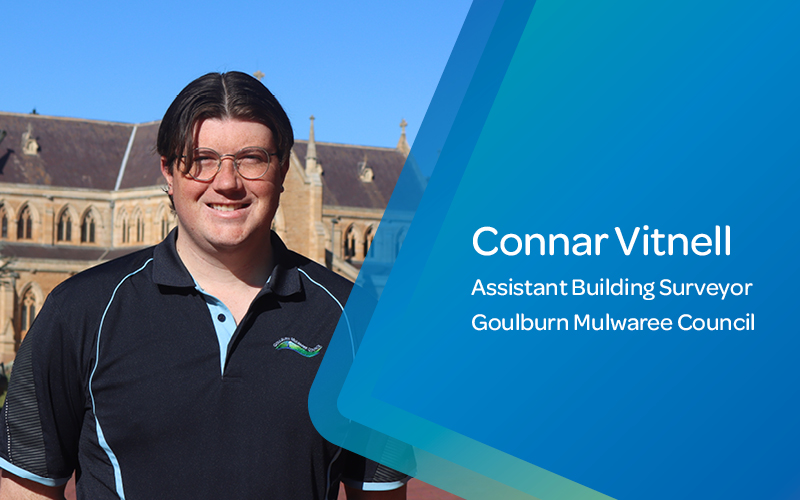
Q&A with Connar Vitnell, Building Surveyor, Goulburn Mulwaree Council
Connar Vitnell didn’t plan to become a building surveyor. A Bachelor of Arts, time in home building sales, and a stint on the warehouse floor eventually led to a role that balances fieldwork with desk time and technical detail with real conversations. Today at Goulburn Mulwaree Council, Connar is part of a dedicated team of Building Surveyors helping residents bring their projects to life – safely, legally, and with minimal stress.
Careers at Council recently caught up with Connar to learn more about the role, training pathway, and why Goulburn is a great place to build a career.
Q. How did your career begin, and what ultimately led you into building surveying at council?
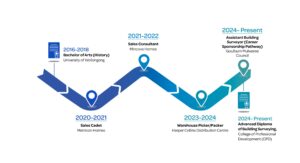
A. I studied a Bachelor of Arts, worked in book retail, then moved into sales roles with Metricon and Minkco Homes. The work was interesting but the hours, travel, and weekend load wore me down.
I came home to Goulburn, did a hands-on warehouse role for a year, and saw council was hiring. I applied once, missed out, then reapplied and started in January. The balance is perfect for me: some days in the field, some at the desk, and there’s something new to learn every day.
Q. You’re studying toward your Advanced Diploma of Building Surveying sponsored by council. Can you explain what the career sponsorship pathway involves?
A. To work as a building surveyor in NSW you need accreditation from the Building Commission, and that means completing the Advanced Diploma of Building Surveying with a recognised training provider.
Council sponsors my study and, just as importantly, gives me the practical experience including supervised inspections for stormwater, frames and finals, that you must log. In the private sector it would be hard to get that variety and volume consistently. I’m really grateful for this opportunity!
Q. What does your progression pathway look like over the next couple of years?
A. It’s an assistant role to start. The plan is A4 accreditation within a year, then A3 once I’ve logged enough inspections and finished the coursework. A3 is when you step out of “assistant” and into a full building surveyor position.
Q. What do you enjoy most about the day-to-day work?
A. It’s detailed but very people focused. One hour I’m deep in an assessment; the next I’m on site explaining how to fix an issue so a family can get their shed or building extension over the line. My sales background helps – it’s about understanding the goal, knowing the rules, and finding a path that works within them.
Q. Building regulations can be complex. How do you stay on top of them, and what have you learned on the job?
A. Everything ties back to the Environmental Planning and Assessment framework and, on the building side, the Building Code of Australia and National Construction Code, with hundreds of referenced standards.
The learning never stops because legislation and guidance keep evolving. Early on I learned about CodeMark certificates and performance solutions on a rural inspection, and recently I worked through an easement issue that needed a site-specific footing design and input from our utilities engineers. You’re always picking up new learnings.
Q. Which internal teams do you collaborate with most, and how does that help applicants?
A. A lot of our work is with Planning – development assessment, support, and liaison officers. Plus, utilities, because council is the local water authority and we assess sewer and water components. We also loop in development engineers on stormwater and driveway standards and engage our governance team’s access information officers around document access and public enquiries. That coordination means applicants get clearer answers and fewer surprises on site.
Q. What does a successful week look like for you?
A. It varies. Some weeks everything lands at once and I can issue several development approvals and section 68s, which cleans up the dashboard. In heavy inspection weeks, success is getting results out, paperwork complete, and keeping applicants informed if something slips to Monday. The aim is to avoid loose threads.
Q. How long does a straightforward project usually take, and what can delay it?
A. If the applicant has done their homework and there are no amendments, it can be two to three weeks from landing on my desk to approval. Sheds are often straightforward. Common delays include DCP non-compliances that need public exhibition, or plans lodged over an easement that must be amended. That can stretch the overall timeline to six weeks or more.
Q. How would you describe the workplace culture at Goulburn Mulwaree Council?
A. Positive and supportive. People help without being asked – you hang up from a tricky call and a teammate is there with a suggestion. Utilities engineers will sit down and sketch a solution, and new starters get real support, including resources passed down by colleagues. Milestones like graduations and exam passes get recognised. If someone makes a mistake, the focus is on fixing it and learning, not blame. It’s calm, constructive, and led well from the top.
Q. What would you say to someone considering building surveying as a career?
A. It’s genuinely different every day. Even two sheds on neighbouring lots are assessed on their own merits. The fieldwork is rewarding because you’re helping people build things they’ll live in and use for decades, and you’re making sure it’s safe and built properly. You can feel that impact.
Q. What makes Goulburn a good place to live and work?
A. Location is a big one – about an hour to Canberra and 90 minutes to Sydney! There’s plenty on, festivals like Steampunk, live music, and green spaces everywhere. It’s busy enough that you won’t get bored, but quiet enough that you can find space when you want it. The community feels like a community, and the growth here means steady, interesting work ahead.
Inspired by Connar’s story? A career in building surveying offers something unique – the chance to combine technical knowledge, problem-solving, and community impact. With strong demand across Australia and multiple pathways into the profession, it’s a rewarding choice for those who enjoy variety, continual learning, and meaningful public service. Explore current building surveying and planning roles here!